Translate the project into material requirements
Indoor cabinetry, a workbench and outdoor seating place different demands on timber. Consider structural load, abrasion, moisture exposure, desired weight, surface texture and how often the finish can be renewed. Hardness can resist dents, but very hard timber may increase tool wear and make fine fitting slower.
Species names are useful shorthand, not a guarantee that every board behaves alike. Growth conditions and sawing pattern influence density, colour and grain. Inspect individual boards and ask how the timber was dried and stored.
Follow grain through every face
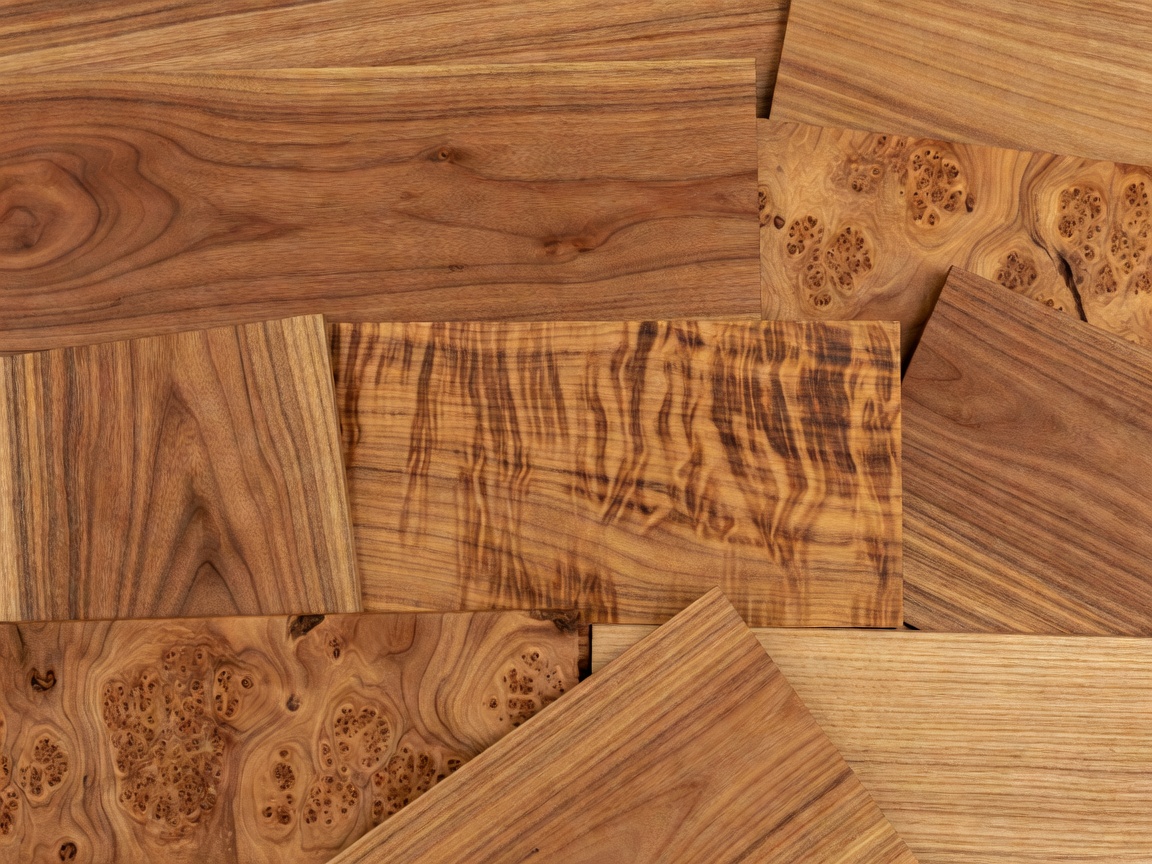
Look along the face, edge and end of a board. Straight grain is generally predictable to machine and structurally efficient. Curly, interlocked or reversing grain can create dramatic figure but may tear during planing. Sharp edges, fine passes, scraping or careful sanding can help.
Inspect for twist, bow, cup, loose knots, checks, insect damage and pockets containing resin or bark. Knots interrupt grain and can weaken narrow structural components. End checks may extend farther than they appear, so retain sufficient trimming allowance.
Moisture content changes dimensions
Wood exchanges moisture with the surrounding air. Most dimensional change occurs across the grain, while movement along the grain is comparatively small. A wide solid-wood top therefore needs fasteners or joinery that hold it flat while allowing its width to change.
A moisture meter helps compare boards, but one reading is not enough. Check several locations and allow stock to acclimatise in conditions resembling the finished environment. Sticker boards so air reaches both faces and support them at regular intervals.
Movement rule
Locate a component where the design requires it, but provide room in the cross-grain direction. Glue cannot make a wide solid panel dimensionally inert.
Price the usable part, not only the rough board
Create a cutting list with finished sizes and sensible machining allowances. Assign long, straight parts first because they are hardest to recover from short sections. Smaller rails and blocks can often fit around knots and checks. Mark related visible parts as a set and preserve their orientation during machining.
| Priority | Look for | Watch for |
|---|---|---|
| Stable frame parts | Straight grain and dry stock | Grain runout near joints |
| Wide visual panels | Compatible colour and figure | Restricted cross-grain movement |
| Painted surfaces | Uniform, smooth material | Exposed absorbent edges |
| Outdoor work | Suitable durability and drainage | Trapped water and exposed end grain |